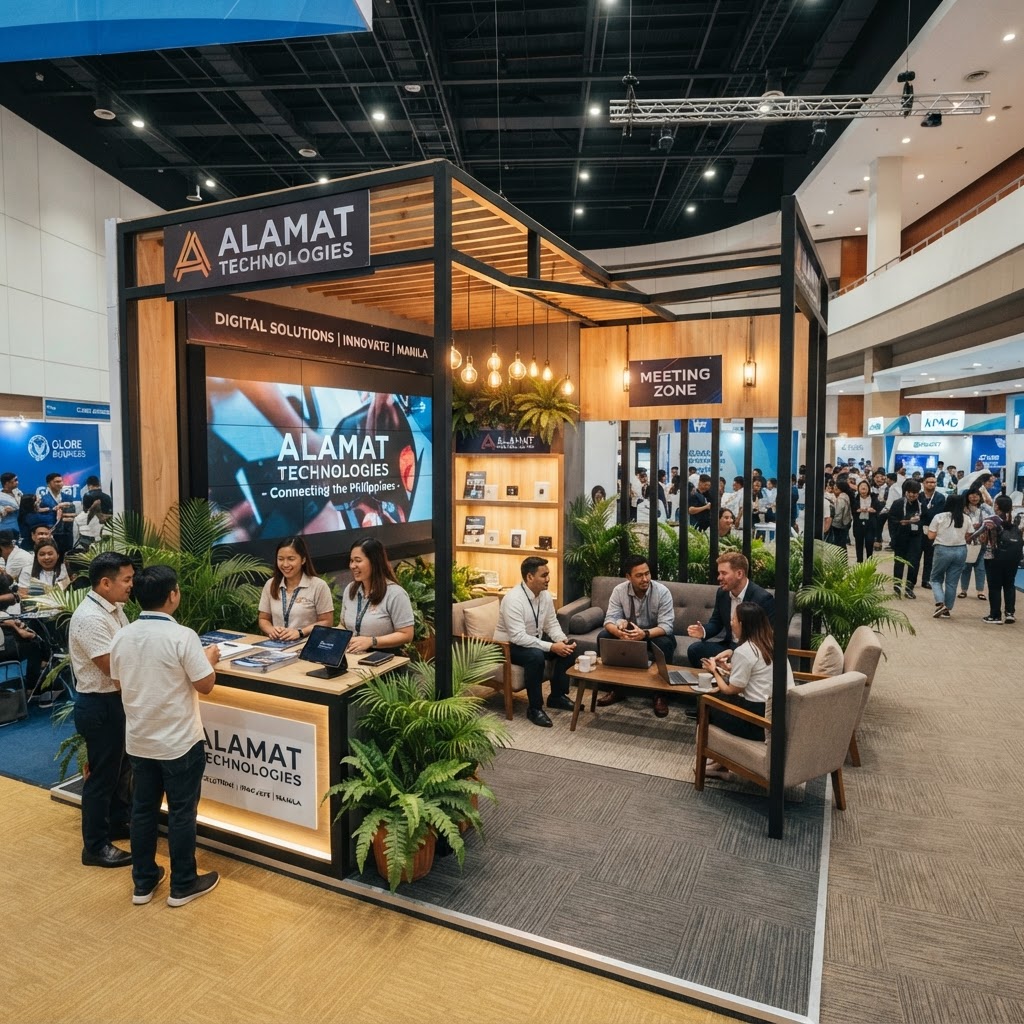
Exhibiting in the Philippines: A Practical Guide for Overseas Brands
The Philippines is one of Southeast Asia's most overlooked exhibition markets. With a population of over 110 million, a fast-growing economy, widespread English fluency, and a government pouring investment into infrastructure and manufacturing, the country offers overseas exhibitors real opportunity with less competition than Singapore or Bangkok. But it also comes with its own rules: no ATA Carnet, heavy Manila traffic, typhoon season, and a lead-follow-up culture that runs on Viber and Facebook Messenger rather than email alone.
This guide walks you through the practical decisions: choosing the right show and venue, handling customs, designing a booth that works in a tropical climate, staffing it well, following up effectively, and budgeting realistically.
Why Exhibit in the Philippines?
The Philippine economy has grown consistently above 5% in recent years, driven by services, manufacturing, construction, and remittance-fueled consumer spending. Several trends matter to exhibitors:
- Infrastructure spending. The government's "Build Better More" programme is driving demand for construction equipment, building materials, engineering services, and industrial technology.
- Manufacturing growth. Electronics and semiconductor assembly remain pillars of the economy, and factories are upgrading equipment and automation.
- A young, connected market. Median age is around 25, and Filipinos are among the heaviest social media and messaging app users in the world.
- English proficiency. Business is conducted in English, which dramatically lowers the language barrier for overseas teams compared to Thailand, Vietnam, or Indonesia.
For many overseas brands, the Philippines is also a market where a single well-run show can generate disproportionate visibility, because the business community in Manila and Cebu is tightly networked.
Choosing the Right Show
Focus on shows that match your industry and have a track record of trade visitors, not just walk-in crowds:
- PhilConstruct (construction and building) — one of the largest trade shows in the country, held in Manila and with regional editions in Cebu and Davao.
- WOFEX (World Food Expo) — the leading food and beverage show, strong for food processing, packaging, and food service equipment suppliers.
- Manufacturing Technology Congress / industrial shows — targeted at factory automation, machinery, and industrial solutions.
- Agrilink (agriculture and agri-tech) — the biggest agri-trade event, useful for suppliers of inputs, equipment, and cold-chain technology.
- Manila FAME (design and lifestyle products) — relevant for buyers and brands in home, fashion, and craft sectors.
Check whether the show is trade-only or open to the public. Public days bring huge crowds but low-quality leads; trade days are where the real buyers are. Ask organisers for the previous edition's audited visitor numbers and trade-versus-public split before committing.
Venues: Manila and Beyond
Most major shows happen at three Manila venues:
- SMX Convention Center (Mall of Asia complex, Pasay) — the largest and most professional venue, hosting most international-scale shows.
- World Trade Center Metro Manila (Pasay) — an older venue used by several industrial and B2B shows; rigging and power arrangements vary by organiser.
- Philippine International Convention Center (PICC) and hotel venues — used for conferences and smaller trade events.
Regional options include SMX-type venues in Cebu and Davao, worth considering if your target market is Visayas or Mindanao rather than Luzon.
Two practical Manila realities to plan around:
- Traffic. EDSA and the surrounding arterial roads can turn a 10-kilometre journey into a two-hour crawl. Book accommodation within walking distance or a short hop of the venue, and schedule all meetings with generous buffers.
- Weather. Typhoon season runs roughly June to November. Shows proceed in almost all conditions, but flights can be disrupted, so build an extra day into your inbound travel and consider waterproof transport cases for booth materials.
Customs and Shipping: What Makes the Philippines Different
The single most important thing to know: the Philippines is not a member of the ATA Carnet system. You cannot use a carnet for temporary imports the way you can in Singapore, Thailand, or Malaysia.
Your realistic options:
- Temporary import via a customs broker. Your broker arranges a temporary importation permit with a re-exportation bond, typically 10% of declared value. Goods must leave the country within the permitted window or duties become payable.
- Consumable entry. For brochures, giveaways, and small items you will hand out or leave behind, a formal consumption entry may be simpler and cheaper than a bond.
- Rent or source locally. For AV equipment, furniture, and even some display systems, renting in Manila avoids customs entirely and cuts freight costs.
Allow two to three weeks for customs clearance and use an experienced local broker. Documentation errors are the most common cause of delays, and storage/demurrage charges at Manila's ports accumulate daily.
Booth Design for a Tropical Climate
Manila is hot and humid year-round, and most venue halls are air-conditioned but crowded. Design accordingly:
- Humidity-resistant materials. Avoid paper-based graphics that curl, untreated wood that warps, and adhesive-only mounts that fail in humidity. Use PVC-free laminated panels, aluminium frames, and sealed MDF.
- LED lighting. LED walls and panels run cooler than older lighting, mattering for both comfort and energy costs. Venues charge separately for power, so confirm your wattage with organisers early.
- Airflow and layout. Open layouts with good circulation keep staff and visitors comfortable through long days. Avoid fully enclosed demo rooms unless your product genuinely needs one, and if it does, ensure the venue's cooling can support it.
- Signage language. English is the language of business, so English signage is fully appropriate. Adding a Tagalog headline or greeting ("Mabuhay!") is a warm touch that local visitors notice and appreciate.
A 6m × 3m booth in Manila typically works best with an open-front layout, product displays at arm's reach, a seated conversation area at the back, and integrated LED screens rather than print backdrops, which degrade quickly in repeated use.
Staffing Your Booth
The Philippines is one of the easiest markets in Asia to staff from abroad. English is universally spoken in business, and Filipino service culture is famously warm and accommodating.
A few specifics:
- Hire at least one locally based team member if you can, ideally someone who knows the local distributor landscape and can qualify leads by industry and region.
- Train on qualifying questions. Filipino politeness means visitors may express interest they do not intend to act on. Train staff to ask direct but courteous qualifying questions: company, role, purchase timeline, and budget authority.
- Business cards still matter. Exchange them with both hands or a slight nod, and treat received cards with visible respect. Follow-up by email within 72 hours remains the professional standard.
- Hospitality works. A booth offering cold drinks and comfortable seating in Manila's heat will hold visitors measurably longer than one without.
Lead Capture and Follow-Up: Where the Philippines Is Unique
Email is the formal business channel, but it is not where conversations continue. The Philippines runs on two messaging platforms:
- Viber — the most-used messaging app in the country, especially for business contacts who prefer it to SMS.
- Facebook Messenger — the Philippines is one of Facebook's largest markets, and Messenger is a completely normal channel for B2B follow-up, particularly with small and mid-size companies.
Practical approach: capture the usual name, company, role, and email at the booth, and also ask, "What's the best way to reach you, Viber or Messenger?" Tag each lead accordingly. In your 72-hour follow-up, send the formal email summary and, where invited, a short Viber or Messenger message referencing the conversation. Response rates on messaging channels are typically several times higher than email alone.
Distributor conversations deserve special attention: many Philippine buyers prefer to purchase through local distributors, so capture and route distributor leads to your channel management process immediately rather than treating them as end-user leads.
Realistic Budget for a 6m × 3m Booth (from overseas)
| Item | Estimated cost (USD) | | --- | --- | | Space rental (18 sqm at ~$300–450/sqm) | $5,400–8,100 | | Booth design and build (custom) | $6,000–12,000 | | Freight, customs broker, bonds | $2,500–5,000 | | Travel and accommodation (3–4 staff) | $4,000–7,000 | | Marketing collateral and lead capture | $1,000–2,500 | | Contingency (10–15%) | $2,000–3,500 | | Total | $21,000–38,000 |
Costs are generally lower than Singapore but higher than Vietnam or Indonesia for equivalent quality, mostly due to freight and customs complexity. Renting locally and using a Manila-based contractor can cut $5,000–8,000 from the build and freight lines.
Common Mistakes to Avoid
- Assuming ATA Carnet applies. It does not. Arrange customs strategy months in advance, not weeks.
- Underestimating traffic. A missed meeting because of EDSA congestion still reads as unreliability to a new contact.
- Skipping trade-day verification. Public-visitor shows inflate lead counts and waste follow-up effort.
- Following up by email only. In the Philippines, Viber and Messenger are where replies actually happen.
- Ignoring typhoon season logistics. Fly in a day early and pack booth materials in sealed, waterproof cases between June and November.
- Treating distributor leads as end-user leads. Route them differently from the first conversation onward.
Conclusion
The Philippines rewards exhibitors who prepare for its specific realities: broker-handled customs instead of carnets, venue-adjacent accommodation to beat Manila traffic, humidity-proof booth materials, warm English-speaking staffing, and follow-up on Viber and Messenger rather than email alone. Get those right, and you will find a young, fast-growing, well-networked market where a single strong show can open doors across the whole archipelago.
Planning your first show in Manila? Get your venue, booth and follow-up plan in order with a booth consultation before you commit to space.